In-home design consultations in Edmonton, Prince George and nearby towns
Accessible & aging in place

Stay in the home you love

Bathrooms and homes designed for the way you move now and later: curbless showers, grab bars on solid blocking, wider doors and comfortable heights, built without the hospital look.

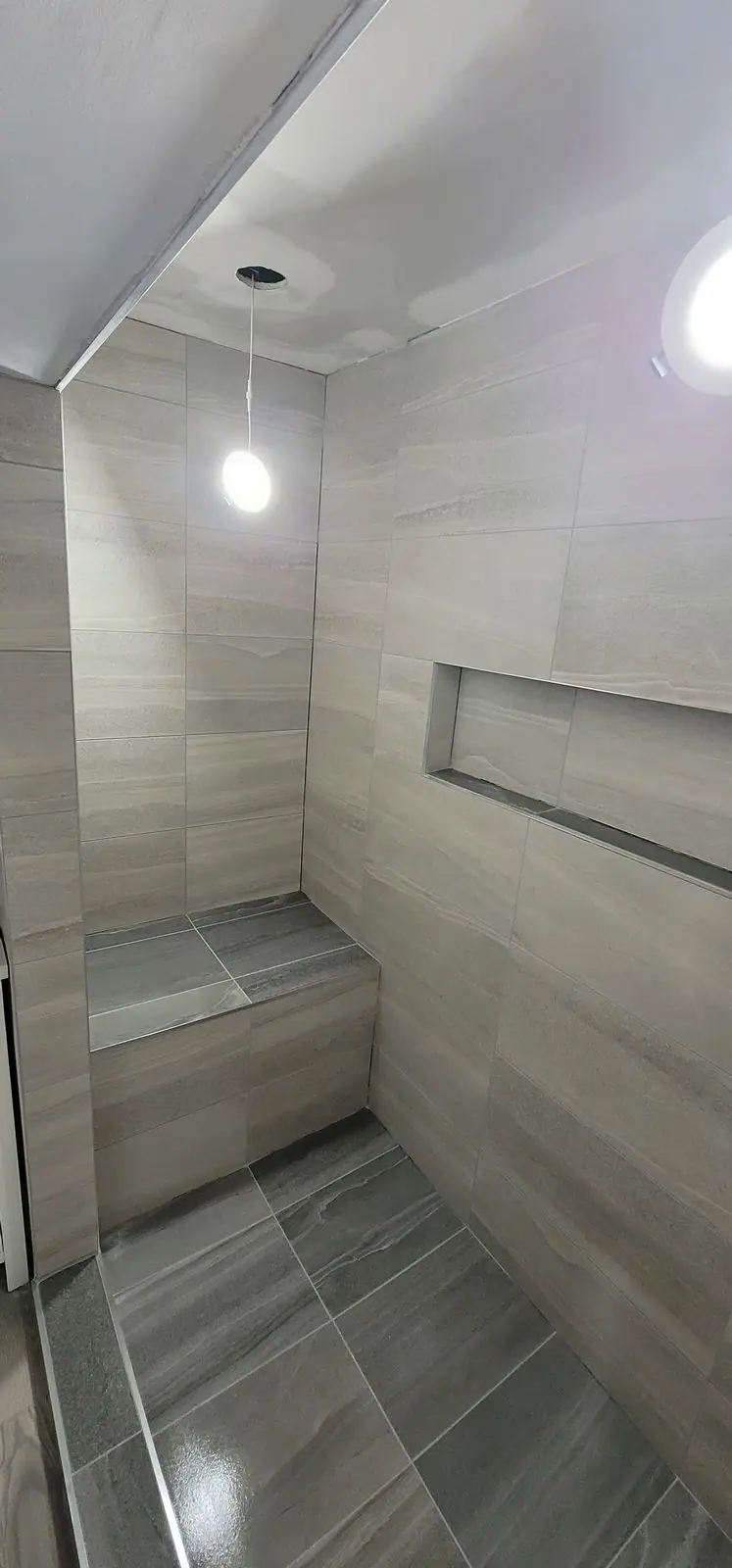
A tiled walk-in shower built by Zenith
Zenith job-site photo

Safer, easier rooms that still feel like home

Every one of these can be part of a bathroom we are already renovating, or a project on its own.

Curbless walk-in showers

No curb to step over. The floor slopes gently to a linear drain, built on cement board and a bonded sheet membrane, and flood-tested before tile, the same as every Zenith shower.

Grab bars on solid blocking

Bars screwed into solid wood behind the tile, at the heights that help. We recommend blocking in every bathroom, even if you don't want bars yet, so they can go in later without opening the wall.

Seats and comfortable heights

A fold-down shower seat, a comfort-height toilet, and a hand shower on a slide bar you can use sitting or standing.

Vanities you can sit at

Wall-hung basins with knee space and covered pipes, mirrors and storage you can reach, and lever faucets that work with a closed hand.

Wider doors, level floors

Doorways widened for walkers and wheelchairs (with the framing done properly), lever handles, and flush transitions instead of trip-edge thresholds.

Anti-scald protection

Pressure-balance or thermostatic shower valves with the hot-water limit set, so a flush elsewhere in the house can't scald anyone.

Floors that grip, edges you can see

Matte, slip-resistant tile (small mosaics on shower floors) and enough contrast between floors, walls and grab bars to judge edges with tired or low vision.

Light, day and night

Brighter, even lighting for aging eyes, and a low night light on the way to the bathroom.

Entries, steps and decks

Where the home needs it: fewer steps at the door, sturdy rails, level landings and decks planned so a walker or wheelchair can use them. Ramps are designed case by case, with permits where needed.

Designed around the people who use it

  1. Tell us what you need

    Our online questions include one about accessibility, now or in the next few years. A short note about who uses the room and how helps us prepare.

  2. Design visit in your home

    A $250 + GST design consultation, credited to your project when you go ahead. We measure, watch how the room is used, and design it in 3D with you.

  3. An accessibility check, in writing

    Our designer checks the plan against accessibility targets (turning space, door widths, seat and grab bar heights, reach, slip resistance) and shows you each one with where the number comes from. If an occupational therapist has written recommendations, we design to them.

  4. One fixed price

    The scope lists every grab bar, the blocking behind it, the door framing and the shower slope, so nothing is a surprise.

  5. Built to last

    Cement board and a sheet membrane in every shower, blocking photographed before the walls close, and a lifetime workmanship guarantee on our work.

What changes

Typical changes, described in words. Your design is drawn for your own room at the visit.

Tub to curbless shower

Before

  • A tub wall to climb over
  • A shower curtain and a slippery tub floor
  • Nowhere to sit, nothing solid to hold

After

  • A level walk-in shower with a linear drain
  • A fold-down seat and a hand shower on a slide bar
  • Grab bars on solid blocking, a matte mosaic floor

Main bathroom for a wheelchair

Before

  • A 30 in door and a vanity cabinet in the way
  • No room to turn around
  • Toilet tight to the tub

After

  • A wider door with a lever and a flush threshold
  • A wall-hung basin with knee space and open floor to turn
  • Toilet at comfort height, set at the right distance from a wall with grab bars

Planning ahead, without the look

Before

  • A dated bathroom you want to update anyway
  • Thoughts of staying in the house for the long run

After

  • A spa-style bathroom that looks like any other
  • Blocking in the walls for future bars, a low or no curb, lever fixtures
  • Ready for later, with nothing to tear out

Tax credits and grants to check

These programs are run by governments, not by Zenith. Amounts and rules change and every program decides who qualifies: check with the program, the CRA or your accountant before you count on it. Some programs need approval before any work starts, so check with them before you sign.

Across Canada

  • Home Accessibility Tax Credit (HATC) (opens the official page in a new tab)

    Canada Revenue Agency (line 31285)

    A non-refundable federal credit on up to $20,000 a year of eligible home accessibility expenses.

    Who it is for: A person 65 or older at the end of the year, or eligible for the disability tax credit (some relatives can claim for them). The work must help them get into, move around or function in the home, or reduce the risk of harm. Check eligibility with the program.

    Good to know: Can be claimed together with the medical expense tax credit for the same work in some cases (CRA page).

  • Multigenerational Home Renovation Tax Credit (MHRTC) (opens the official page in a new tab)

    Canada Revenue Agency (line 45355)

    A refundable credit of 14.5% of up to $50,000 of qualifying costs (up to $7,250 per claim).

    Who it is for: Creating a self-contained secondary unit so a senior (65+) or an adult eligible for the disability tax credit can live with a qualifying relative. Check eligibility with the program.

  • Medical Expense Tax Credit (renovation expenses) (opens the official page in a new tab)

    Canada Revenue Agency (lines 33099 / 33199)

    Eligible renovation costs can count as medical expenses.

    Who it is for: A person with a severe and prolonged mobility impairment (or who lacks normal physical development), for work that would not normally add to the home's value. Check eligibility with the program.

  • Veterans Independence Program (VIP) (opens the official page in a new tab)

    Veterans Affairs Canada

    Help with services to stay at home, including home adaptations, up to set yearly maximums.

    Who it is for: Some Veterans (for example those receiving a VAC disability benefit), some survivors and primary caregivers. VAC decides. Check eligibility with the program.

Alberta

  • Residential Access Modification Program (RAMP) (opens the official page in a new tab)

    Government of Alberta

    Up to $12,000 per person each program year (April to March) and up to $24,000 per person in 10 years.

    Who it is for: Albertans with low income who use a wheelchair, seniors 65+ who use a four-wheeled walker, or people with certain progressive conditions; homeowners and tenants can apply. Income limits apply. Check eligibility with the program.

    Good to know: The program page said (2026-10-04) its guidelines and form would be updated in the coming weeks. Apply and get approval before the work.

  • Alberta Aids to Daily Living (AADL) (opens the official page in a new tab)

    Government of Alberta

    Help with basic medical equipment, including bathing and toileting equipment (a cost share applies). Equipment, not renovation work.

    Who it is for: Albertans with a long-term disability, chronic or terminal illness, assessed by an AADL-approved assessor (for example an occupational therapist). Check eligibility with the program.

British Columbia

  • BC Rebate for Accessible Home Adaptations (BC RAHA) (opens the official page in a new tab)

    BC Housing

    Rebates of up to $20,000 for accessibility adaptations, first come first served until the year's funds run out (renews April 1).

    Who it is for: Low- and moderate-income BC households with a permanent disability or loss of ability; income and asset limits apply. Tenants apply with their landlord. Check eligibility with the program.

    Good to know: Work started before written approval is generally not eligible, and some items need an occupational or physical therapist's assessment. Replacing items that are not part of the adaptation is not covered.

  • BC Home Renovation Tax Credit for Seniors and Persons with Disabilities (opens the official page in a new tab)

    Government of British Columbia

    A refundable credit of 10% of up to $10,000 of eligible expenses (up to $1,000 a year).

    Who it is for: A senior 65+ or a person with a disability, or a family member living with them, for work like grab bars, walk-in tubs or showers and wider doors. Check eligibility with the program.

Official pages checked October 4, 2026. Programs change: always read the current rules on the program's own site.

Accessible renovation FAQ

Is my home required to meet accessibility codes?

In most cases, no. The barrier-free sections of the building codes are written mainly for buildings other than houses. In a home we design to best-practice targets from Canadian and international accessibility standards, and to your occupational therapist's report if you have one. Some funding programs set their own requirements, so check those before work starts.

Will it look like a hospital bathroom?

It doesn't have to. Grab bars come in finishes that match the faucets, curbless showers look like any modern walk-in, and a fold-down seat folds out of the way. Most guests won't notice.

Can you add blocking for grab bars even if I don't want bars yet?

Yes, and we recommend it in every bathroom we build. Solid wood behind the tile at the right heights lets bars go in later in an hour instead of a tile repair.

How big does a curbless shower need to be?

For aging in place, about 36 in on the short side with room for a seat works for most people. For a wheelchair, about 60 x 36 in or larger. The floor has to be recessed for the slope, which we plan with the framing before anything is built.

Do you work with occupational therapists?

Yes. If an OT has assessed the home, share the report and we will design to it. Some programs require an OT or physiotherapist assessment before work starts.

Can I get a tax credit or grant?

Possibly. The federal Home Accessibility Tax Credit, the Multigenerational Home Renovation Tax Credit, Alberta's RAMP, BC's RAHA rebate and the BC seniors' renovation credit are listed below with their official links. Each program decides who qualifies, and some need approval before any work starts, so check with them first.

Do you build ramps and accessible decks?

Yes, where the site allows. Ramps, rails and level landings are designed case by case, with a permit where one is needed.

A bathroom for now and later

Tell us who uses the room and what's getting harder. We'll design it with you in your home and give you one fixed price.

Book a design consultation